What Is a Strand Test, and When Is It Needed Before a Hair Treatment?
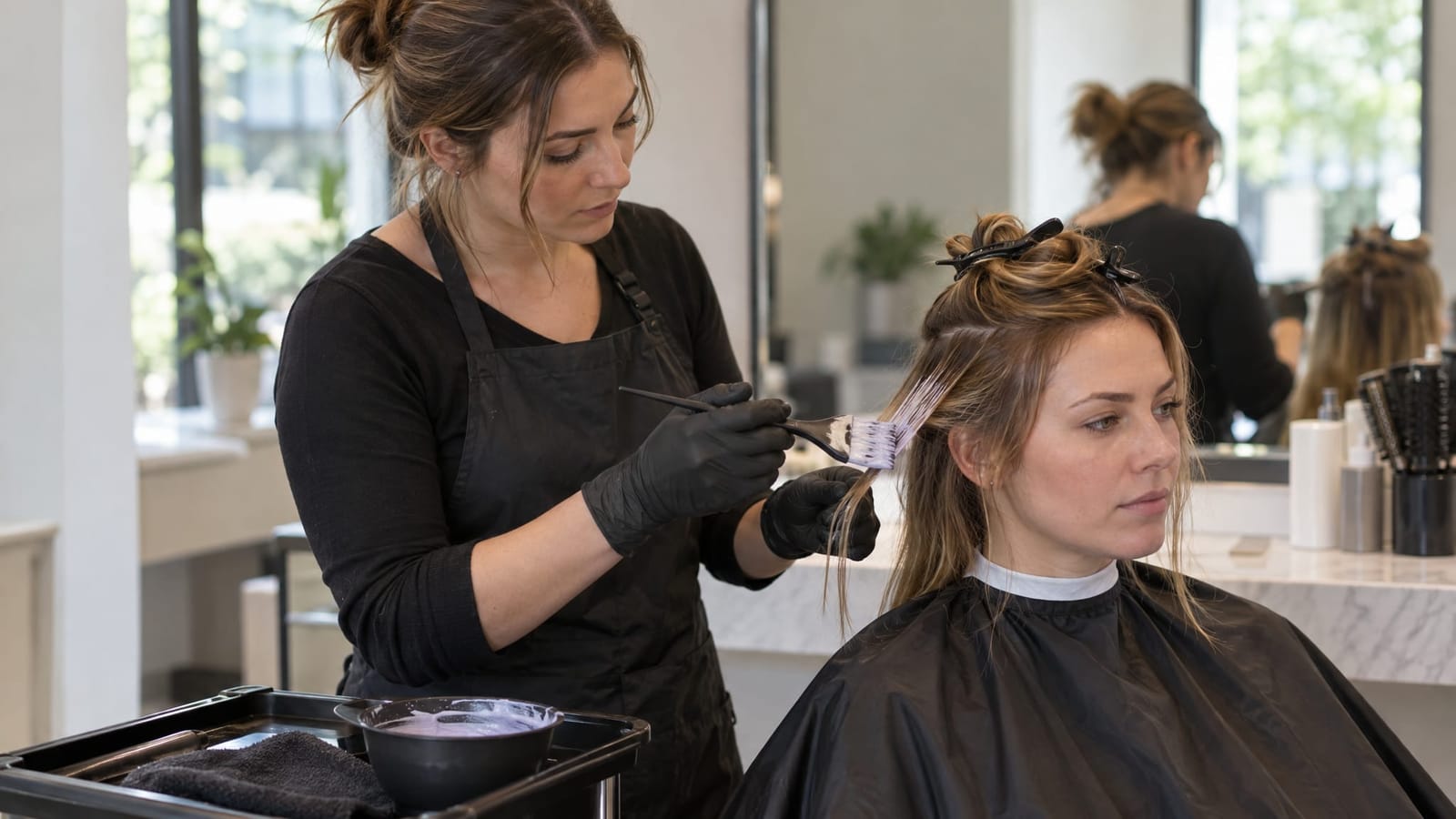
A strand test is a small trial of a planned color, lightening or chemical treatment on a selected section of hair. It lets a stylist assess the likely result and see how that section responds before treating a larger area.
A strand test before hair treatment is especially valuable when hair has been bleached, repeatedly colored or chemically straightened. It can reveal reasons to adjust the formula, change the goal or postpone a service. It is not automatically necessary for every treatment, such as a routine conditioning mask, and it cannot guarantee that every section of hair will react identically.
What Can a Strand Test Reveal?
A test gives your stylist practical information about the proposed service, rather than relying only on how your hair looks before treatment.
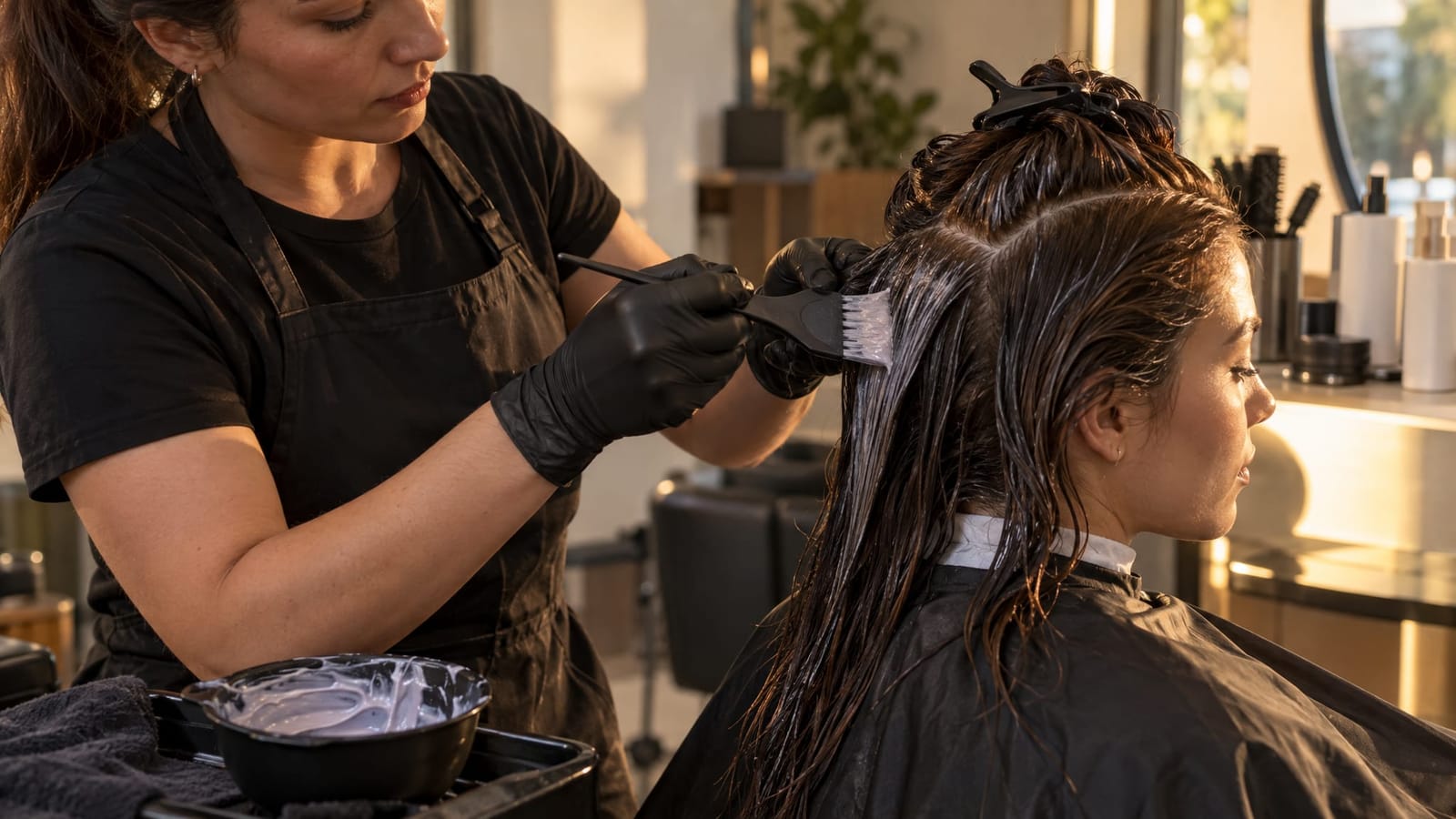
- Color and lightening results: A sample can show how much the hair lightens, which warm tones appear and how a color formula looks on that section.
- Condition after processing: Comparing the sample before and after treatment can reveal increased roughness, breakage or excessive stretch without springing back.
- Uneven response: Previously colored lengths and lighter ends may respond differently from newer growth. A representative sample helps reveal those differences.
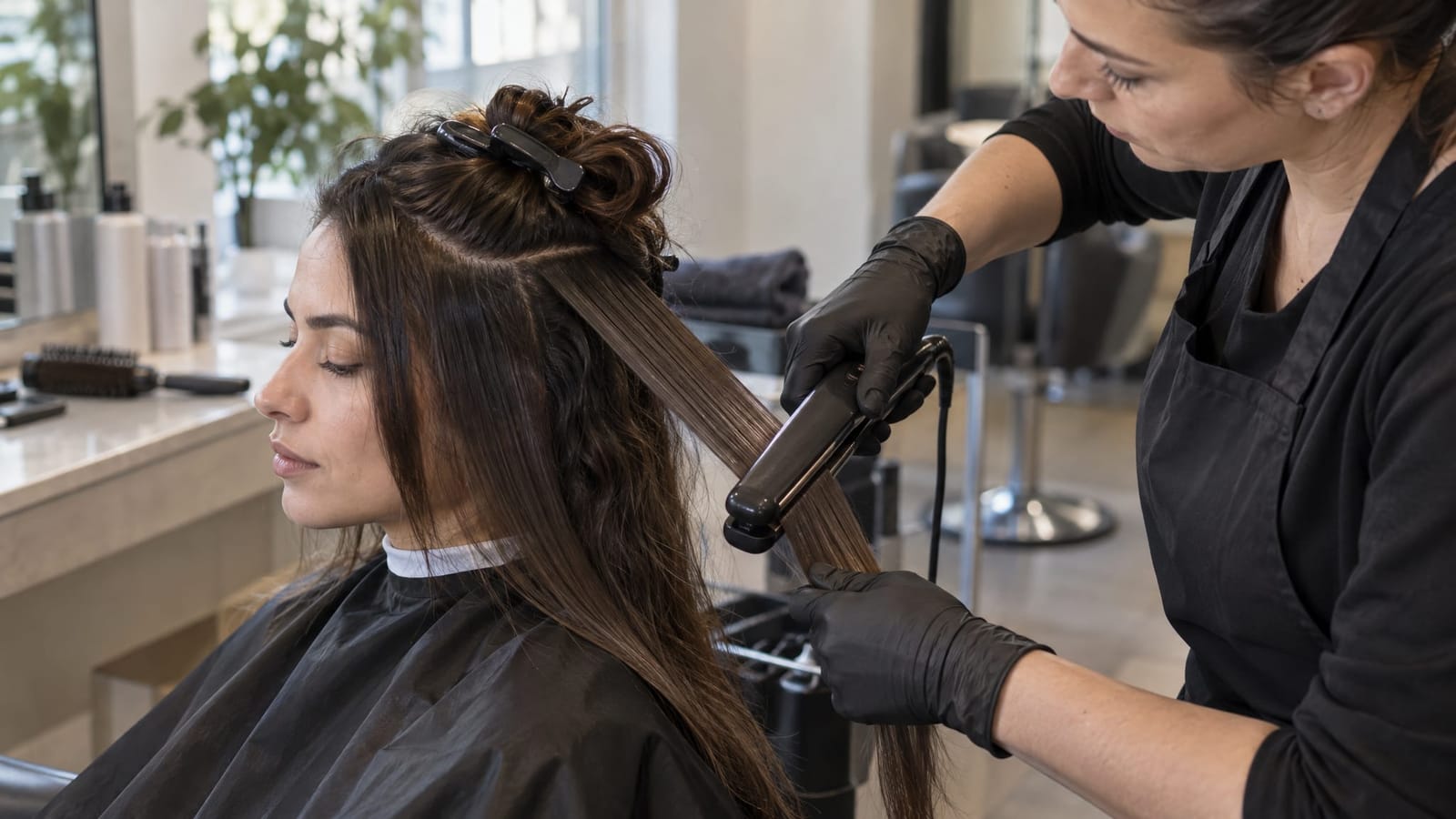
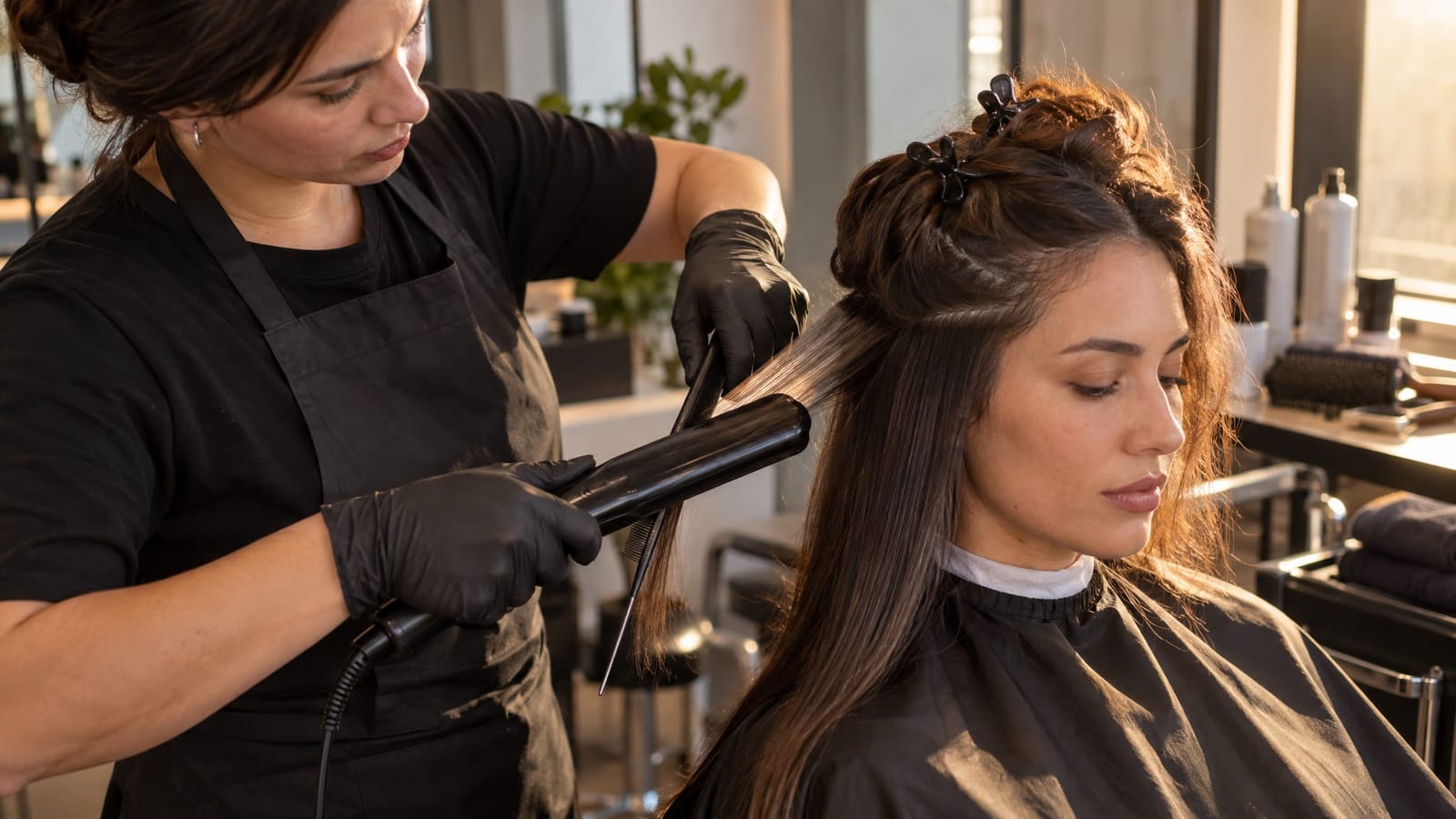
- Response to smoothing: For a smoothing service, a test can help assess the section’s texture, manageability and response to the planned process.
A strand test does not measure every aspect of hair health or predict exactly how long a treatment will last. It answers a narrower question: how does this section respond to this particular process?
When Is a Strand Test Especially Useful?
The more complicated your hair history, the more useful a small trial becomes. Situations that deserve particular attention include:
- A major color change, especially going lighter through existing artificial color.
- Overlapping highlights, bleaching or repeated permanent color.
- Previous relaxing, perming or chemical smoothing.
- Noticeable breakage or fragile, heavily processed ends.
- Uneven bands of color from earlier applications.
- Previous use of henna or color products whose ingredients are difficult to identify.
For example, dark-colored lengths and natural roots may not lighten at the same rate. Testing only the roots would not answer whether the older lengths can tolerate the proposed service.
The product matters as much as the treatment name. A conditioning service and a chemical smoothing process do not necessarily call for the same assessment, even when both are described as making hair feel smoother.
How Does a Professional Strand Test Work?
The details depend on the product and service, but the basic process involves four stages:
- Review the hair history. Previous color, bleach, straightening and other chemical services help determine what the test needs to assess. Processes still present in the lengths matter, even if they happened some time ago.
- Select a representative section. A discreet section can limit visible changes, but it also needs to reflect the hair being treated. Different areas may need separate assessment when their histories differ.
- Apply the proposed process. The test follows the relevant product instructions and planned application method. Where heat is part of the service, that step also matters to the assessment.
- Finish and evaluate. After the appropriate rinsing and finishing steps, the stylist assesses the result, texture and strength. A dried color sample allows a clearer view of the finished shade.
A test of one formula or method is not a substitute for evaluating a substantially different plan.
How the Result Can Change the Treatment Plan
A strand test is useful because it informs a decision, not simply because it produces a sample.
- The result looks suitable and the section remains in acceptable condition: The test supports proceeding with the proposed plan, alongside the wider hair assessment.
- The hair remains intact, but the result misses the goal: A revised formula, different technique or less dramatic change may be more appropriate.
- The sample becomes fragile or breaks: Postponing or avoiding the proposed chemical process may be the better option.
For example, if a lighter shade requires more processing than fragile ends can tolerate, keeping more depth may be a better choice than pursuing that shade immediately. A conditioning treatment may improve softness, but softer hair alone is not proof that it can tolerate another chemical service.
Is a Strand Test the Same as an Allergy Test?
No. A strand test evaluates the hair and the likely cosmetic result. A skin allergy test, sometimes called a patch test in hair-color instructions, concerns a possible skin reaction and follows a separate procedure.
A successful strand test does not rule out an allergic reaction or replace the product’s allergy-testing instructions. For a previous reaction to hair dye or an active scalp problem, a licensed healthcare professional can provide individual guidance.
What Information Helps Your Stylist Assess Your Hair?
A clear treatment history makes the assessment more useful. Helpful details include:
- The colors, lighteners, relaxers or smoothing products previously used.
- Which areas were treated, particularly whether products overlapped onto older lengths.
- Any breakage, unusual texture changes or reactions after earlier services.
- Your preferred result and what you are willing to adjust, such as lightness, length or timing.
Product names or packaging photos can be useful when describing at-home treatments.
At Rosée Atelier Beauty Salon in Miami, we offer hair color, bleaching, highlights, keratin treatments, Brazilian Blowout and Hair Botox. Sharing this history gives our licensed cosmetologists useful context for assessing your hair and discussing treatment choices. Our team speaks English and Spanish.
Frequently Asked Questions
How long does a strand test take?
Timing depends on the product’s processing instructions and the finishing steps needed to assess the result. There is no single processing time or universal waiting period that applies to every color, lightening and smoothing service.
Will a strand test leave a visible mark?
The tested section can change color or texture, especially with bleach. Choosing a small, discreet section helps limit visibility, but that section still undergoes the treatment. Placement therefore matters as well as sample size.
Does an earlier successful strand test cover future treatments?
Not necessarily. A different formula, a different service or additional processing since the earlier test can change the picture. A previous result describes the hair and process tested at that time, rather than giving permanent clearance for later chemical services.
The Main Takeaway
A strand test turns a proposed treatment into something your stylist can evaluate on a small scale. Its greatest value is helping shape a realistic plan before committing the rest of your hair.